
Discovering the Exquisite Beauty of Bomkai Sarees from Odisha
Exploring the Elegance of Thick Coarse Cotton Bird Motifs Cotton Ganjam Bomkai Saree In today's video, we're showcasing the ...
India is renowned for its handloom sarees, and one of the most beautiful and unique sarees is the Bomkai saree. Bomkai sarees are a traditional handloom saree from Odisha, India, and are well known for their unique designs and intricate work. These sarees are not only beautiful but also have a rich history and cultural significance.
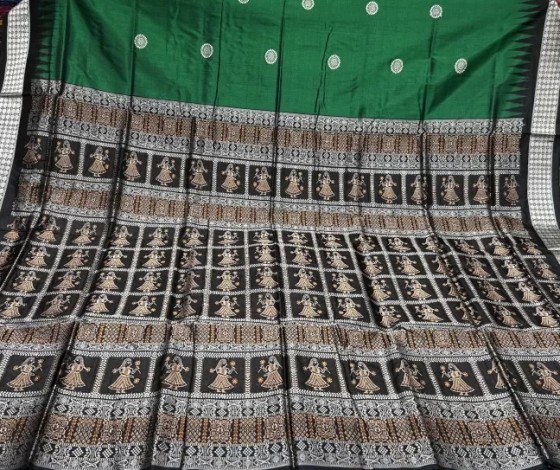
Origin and History of Bomkai Saree
The origin of the Bomkai saree can be traced back to the village of Bomkai in Ganjam district, Odisha. The saree is believed to have originated in the 8th century, during the reign of the Bhanja dynasty. It is said that the Bhanja king was so impressed by the skill and craftsmanship of the weavers in Bomkai that he encouraged them to create unique sarees that would showcase their talent. Thus, the Bomkai saree was born. Over time, the sarees gained popularity and were introduced in the Sonepur district. Today, the Bhulia community has taken up the responsibility of weaving these sarees, carrying on the legacy of the skilled craftsmanship of their ancestors.
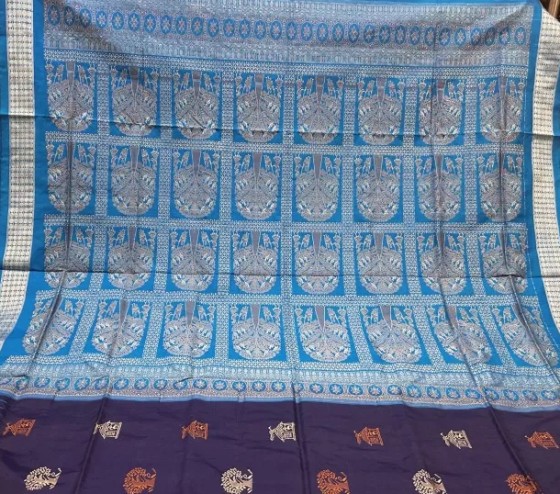
Speciality of Bomkai Saree
The Bomkai saree is unique in its own way. It is made using traditional weaving techniques and has intricate designs that are inspired by nature, mythology, and daily life. The use of contrasting colors and intricate patterns make it a popular choice for formal occasions.
Bomkai sarees are easily identifiable due to their beautiful thread interlocking design on the pallu and the unique motifs on the body. Even if you are not an ardent saree lover, a single glance at these sarees is enough to captivate your heart. The simplicity and traditional touch of Bomkai sarees give them an ethnic vibe that is hard to resist.
Fabrics Used in Bomkai Sarees
The Bomkai saree is made from a variety of fabrics, including silk, cotton, and tussar. Silk Bomkai sarees are the most popular and come in a variety of textures, such as raw silk, tussar silk, and pure silk. Cotton Bomkai sarees are lightweight and comfortable, making them perfect for everyday wear.
Motifs Used in Bomkai Sarees
Bomkai sarees are known for their intricate and unique motifs. The most popular motifs used in these sarees are turtles and butis. These motifs are inspired by nature and mythology and are believed to bring good luck and prosperity.
Most common motifs woven on a bomkai sarees are flower , pot , peacock, fish, temple, dancers etc.
Awards and Recognition
Bomkai saree has received many awards and recognition for its unique designs and craftsmanship. It was awarded the Geographical Indication (GI) tag, which recognizes the unique identity and heritage of a product.
Conclusion
In conclusion, the Bomkai saree is a beautiful and unique saree that has a rich history and cultural significance. It is a testament to the skill and craftsmanship of the weavers of Odisha. By promoting and preserving this ancient tradition, we can help to ensure that the beauty of the Bomkai saree continues to be enjoyed by
Some Similar Sarees

Beautiful Red and Blue combination cotton Ikat saree with blouse piece
₹8000 ( USD 97.56 )

National award winning weaver s dusphulia thick border with Ikat motifs Aanchal Cotton saree
₹21000 ( USD 256.1 )

Beautiful cotton Ashwini saree with temple motifs Aanchal
₹11000 ( USD 134.15 )

Master weaver s creation Kanchi abhijan theme natural dyed Ikat silk saree with blouse piece
₹52000 ( USD 634.15 )

Beautiful traditional Khandua silk kathiphera saree with blouse piece
₹15000 ( USD 182.93 )

Beautiful traditional Utkallaxmi silk saree with blouse piece
₹26000 ( USD 317.07 )

Beautiful tree of life motifs all over body with traditional Aanchal Bomkai Silk saree with blouse
₹20000 ( USD 243.9 )

Traditional Nabakothi motifs inspired Khandua pure silk saree with blouse piece
₹20000 ( USD 243.9 )

Beautiful plain body with border and Aanchal work Cotton Habaspuri Saree with blouse piece
₹8000 ( USD 97.56 )

Master weaver s creation exquisite thick coarse cotton natural dyed Kotpad saree with blouse piece
₹32000 ( USD 390.24 )

Intricately woven bird motifs Gopalpur Tussar silk saree with blouse piece
₹23000 ( USD 280.49 )

Exquisite n classy danti buti Sachipar with extra thread work on Aanchal cotton saree without blouse
₹20000 ( USD 243.9 )