
Khandua Saree - the pride of Odisha
Khandua sari is a popular sari made of silk, which is the pride of Odisha. Odisha is an eastern state of India and the place, where it is weaved, is called Nuapatna, in the district of Cuttack. This Khandua sari is used by Lord Jagannath of Puri Dham one of the most auspicious place for Hindus.
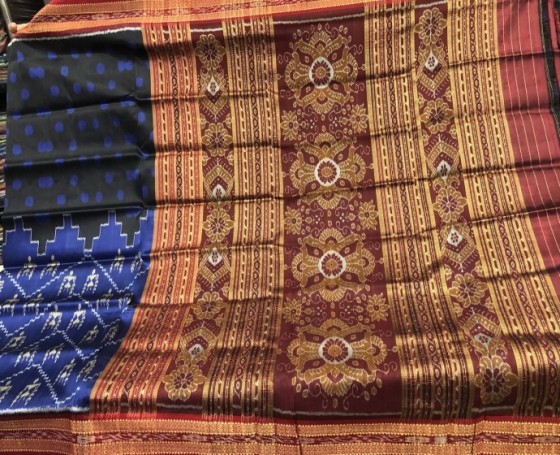
Today looking at the demand to mix designs the descendants of the weaving families have adopted themselves to produce various modern designs and also custom made designs. The `anchal`, as it is known in India is the most attractive part of the Sari and makes a woman look elegant and graceful. The designs of elephants, lotus and other varieties of flowers, various other modern looks with geometrical forms are also crafted. The best feature of this Sari is it weighs hardly 300 grams. Khandua Sari has kept its traditional artistic form with a blend of unique modern touch, according to the current demand.
A very ancient civilization though, the sari is devoted to the Lord from 16th century, as the belief goes. However, its origin dates back to the 12th century. Khandua sari is woven with wooden looms in the traditional style of hand weaving and the whole village of Nuapatna is devoted to this traditional form of weaving. Odisha has kept this culture alive with the government, corporations, society and private public participation. The sari has its own recognition and has many designs, colors and types to depict. The chief attraction of this sari is that it is made of tassar worm from where the yarns are produced. These yarns are converted into exquisite fabrics and saris. Because of huge requirement of the yarn the tassar worm cultivation is undertaken by few co-operative societies that cater to the needs of the weavers. The chief attraction of this sari is that it is made of traditional silk yarn and subsequently converted to beautiful fabrics and saris. The quality of these yarns are tested with stringent guidelines and checked for impurities if any. They are entrusted with the production of quality yarns and thus the silk sari produced is consistently acclaimed worldwide. The laudable appreciation of Khandua Sari is not confined to the people who wear them but from the expert designers and fabric specialist from across the globe. Khandua Sari is famous for its `Ikat` or otherwise popularly known as `bandha`, which is a piece of art to be seen and appreciated. The idea of the ikat is based on the cultural heritage of Odisha. The borders and the anchals consist of many varieties and each one them are attractive and worth praising. The sari is originally designed in red, yellow, maroon, and cream colour. The sari can be seen being used by almost all the Odissi dancers who have represented the dance in India and abroad. The visual effect of the sari is enchanting and widely cherished by experts. The name was so adored that the National handloom expo, once, was named after `Khandua`.
Khandua Sari has reached the international market. For trading inquiry you may contact them in their website. The Orissa Handloom Weaver`s Corporation can cater to your order and supply you the required design, colour and quality of the fabric.
Anita Singh - Weaver from Nuapatna
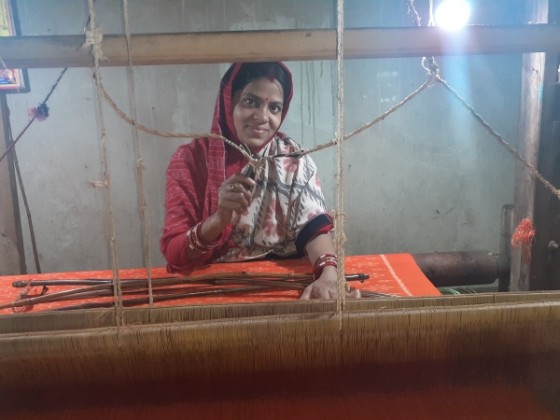
Indramani Patra Weaving Khandua Saree in Nuapatna
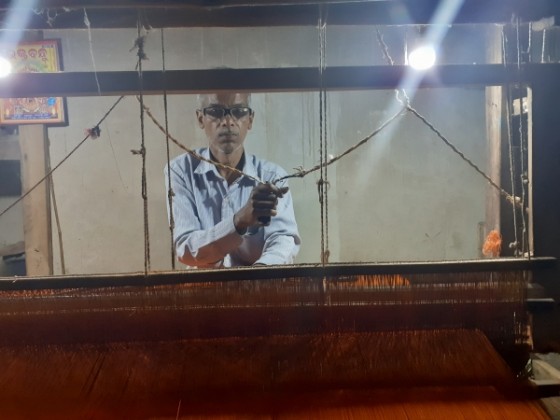
Kailash Tosh Weaving Khandua Saree in Nuapatna
Some Similar Sarees

Exclusively woven traditional Ikat motifs traditional sambalpuri Nabakothi Silk saree with blouse
₹30000 ( USD 365.85 )

Exclusively woven mustard golden dual tone double Aanchal Berhampuri silk saree with blouse piece
₹23000 ( USD 280.49 )

Exclusively woven heavy thread work on front n pallu Ganjam Bomkai Saree with blouse piece
₹27000 ( USD 329.27 )

Exclusively woven fish motifs zari work double Aanchal Berhampuri silk saree with blouse piece
₹25000 ( USD 304.88 )

Beautiful cotton dolabedi saree with blouse piece
₹11000 ( USD 134.15 )

Beautiful Rust Dongria inspired Silk saree with full work blouse
₹19000 ( USD 231.71 )

Nature inspired animal and bird motifs Bomkai Silk Saree with blouse piece
₹29000 ( USD 353.66 )

Traditional fish and turtle butas Sambalpuri Cotton Saree with blouse piece
₹8000 ( USD 97.56 )

Beautiful Red and Blue combination cotton Ikat saree with blouse piece
₹8000 ( USD 97.56 )

National award winning weaver s dusphulia thick border with Ikat motifs Aanchal Cotton saree
₹21000 ( USD 256.1 )

Beautiful cotton Ashwini saree with temple motifs Aanchal
₹11000 ( USD 134.15 )

Master weaver s creation Kanchi abhijan theme natural dyed Ikat silk saree with blouse piece
₹52000 ( USD 634.15 )